Which Shatner life cast?
DISPUTED Two first-person accounts point to different productions; neither is conclusive.
Compare the accountsOne mask. Two disputes. Every source.
In 1978 a store-bought Captain Kirk mask became Michael Myers. This site documents everything that can actually be proven about it — and marks what can't.
Read the documented story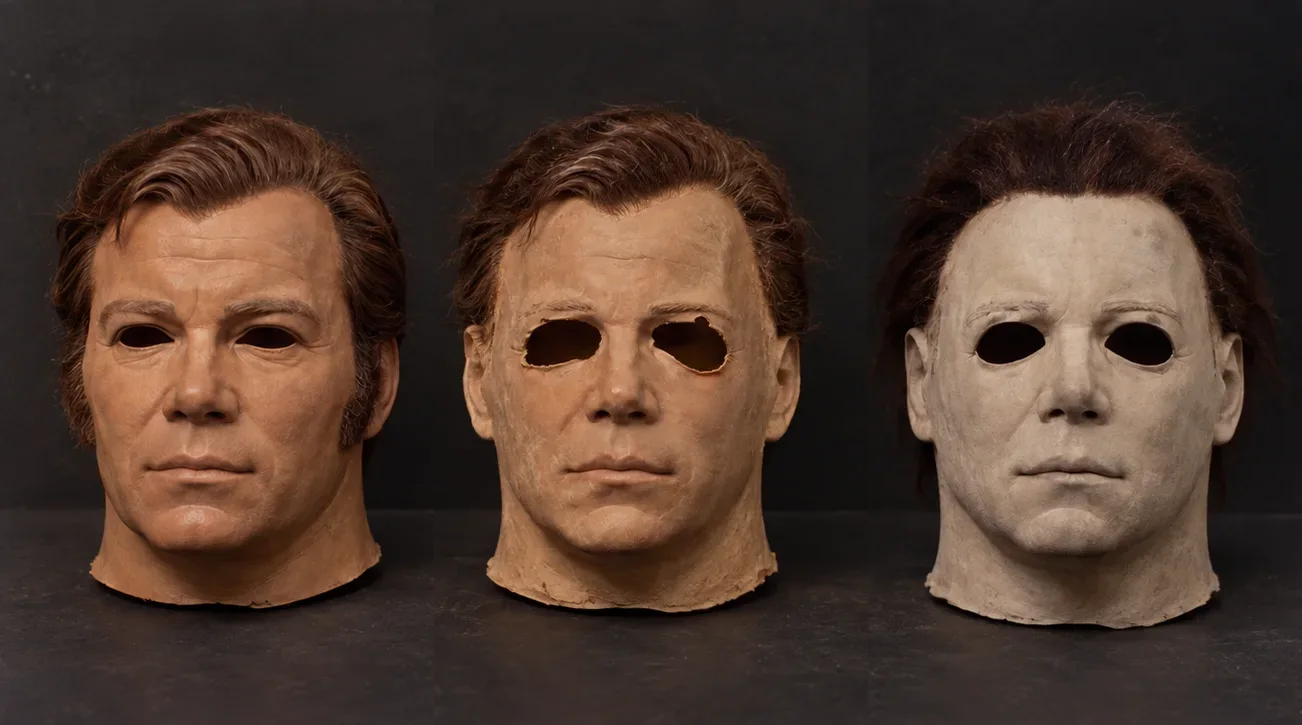
Object study 01
A static reconstruction of the conversion described by production designer and mask performer Tommy Lee Wallace.
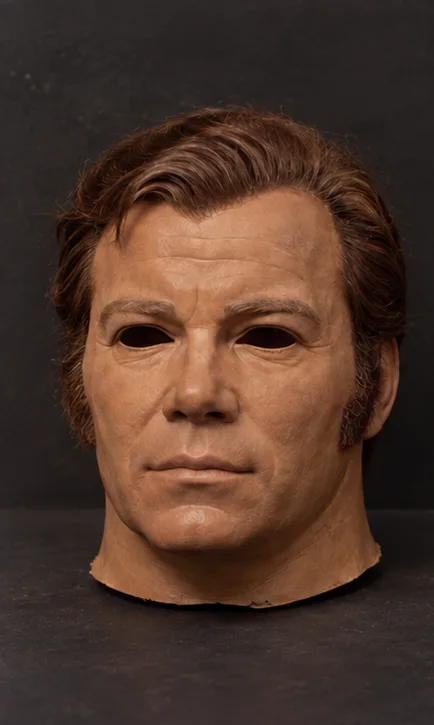
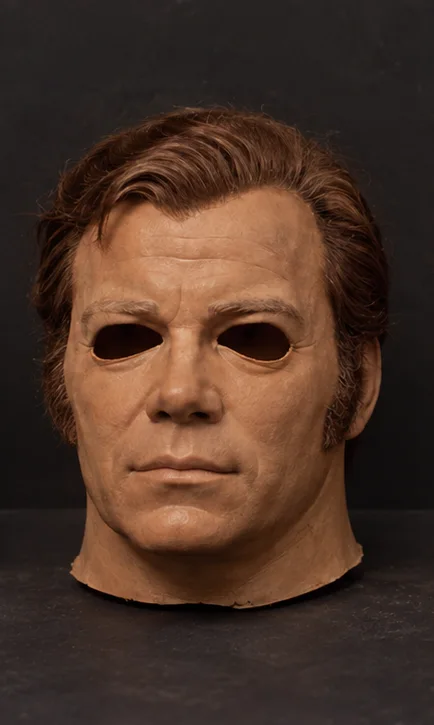
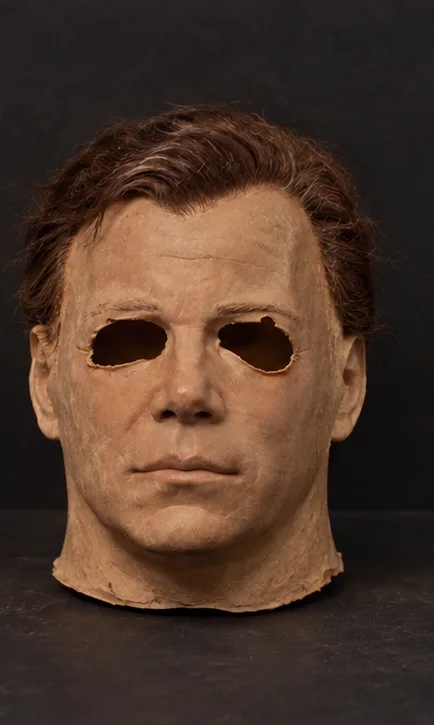
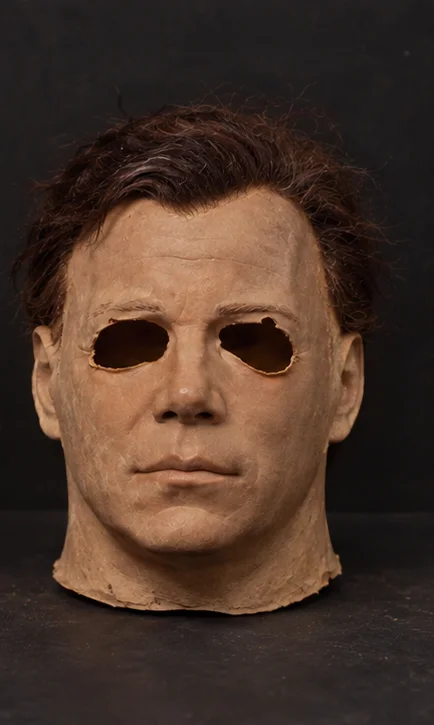
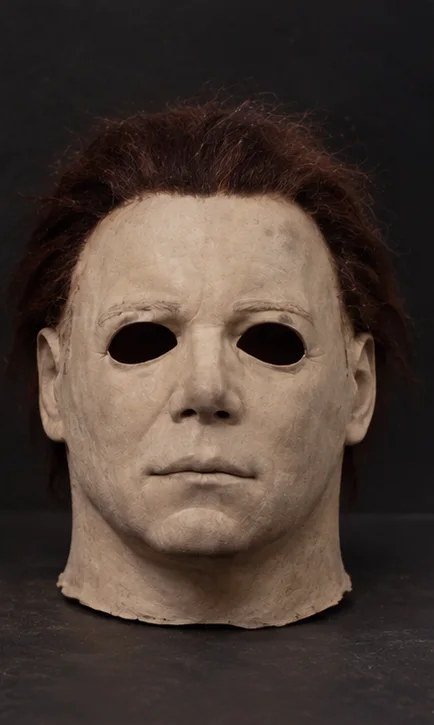
Wallace described enlarging the eyes, altering the hair and sideburns, and spray-painting the retail mask white.[1]
The 10-second answer
The 1978 Michael Myers mask began as a Don Post Studios Captain Kirk mask.[2]
Wallace bought a retail mask on Hollywood Boulevard and converted it for the production.[1]
No primary source resolves whether the underlying Shatner life cast came from Star Trek or The Devil’s Rain.[3]
The mask was not turned inside out.[4]
Open questions
DISPUTED Two first-person accounts point to different productions; neither is conclusive.
Compare the accountsDISPUTED Wallace’s production account conflicts with a later Don Post attribution.
Compare the accountsPersistent errors
The visible conversion was done with paint, cutting, and hair alterations—not by reversing the mask.
See the evidenceIt was a retail Don Post mask based on Captain Kirk, not a screen-used Star Trek prop.
See the evidenceWallace described darkening or mussing brown hair. The record does not support black paint.
See the evidenceContinue the record